Why "everything is running fine" isn't enough anymore
Technology leadership is shifting from 'running things well' to 'proving it clearly.' Here's why 'everything is running fine' no longer satisfies boards, investors, or stakeholders - and what to do about it.
By Dane Eldridge
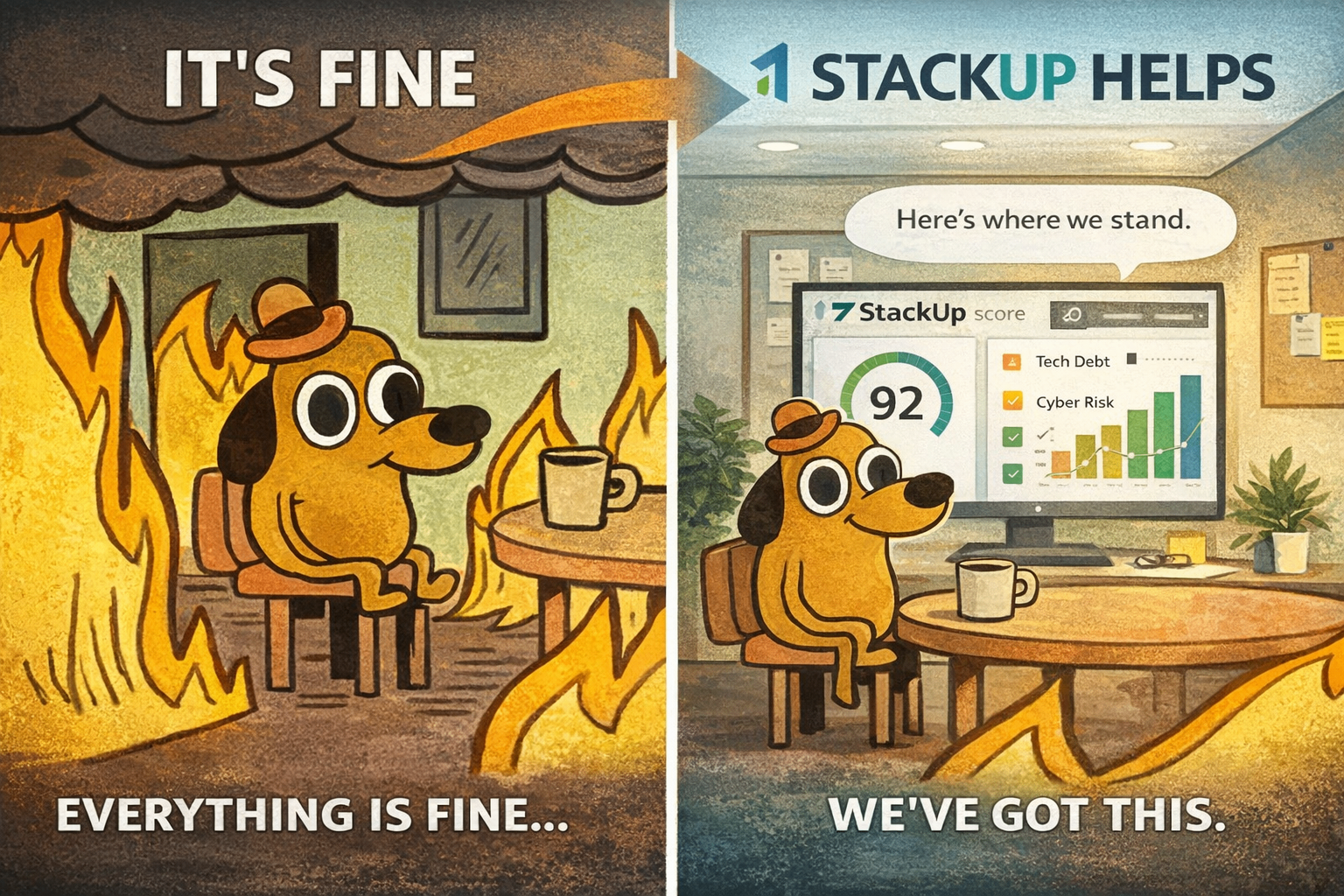
Why "everything is running fine" isn't enough anymore
For a long time, technology was judged pretty simply. If the systems were running, everything was fine. No outages. No obvious fires. Great, everyone could get on with their day.
In many organisations, that was enough. Technology stayed slightly mysterious, partly because not many people had the depth to question it closely.
The "old" world
I've seen this from a few angles. I started as a developer way back, then spent twenty years building and running a software development agency in Sydney. Over time I wrote less code and slowly reached that familiar executive state of knowing just enough to be dangerous. Close enough to follow the conversation. Far enough away to rely on the people who truly understood the details.
Like most CEOs, I tried to stay on top of the technology, especially because that was essentially our product. But also like most CEOs, I had a few other things going on. The list is long and never-ending.
The same is true for many CTOs. I worked with some great ones over the years, but they were often buried under reactive waves of due diligence, compliance, vendor reviews, security questionnaires, and the steady background work of keeping systems moving.
So a quiet shortcut appears. If nothing looks broken, things must be fine.
For a long time, that logic worked. Mostly.
Getting Judged by Higher Standards
Over the past few years though, that assumption has started to wobble.
Boards are asking more detailed questions. Not just "is it working?" but "what's our tech debt?" and "how would we know if we were breached?" Investors want evidence instead of reassurance. Cyber risk is now discussed alongside financial risk, especially here in Australia.
Technology is no longer judged only by uptime. It's now judged by governance, resilience, and visibility. That's a very, very different standard.
Because in this world, "everything is running fine" doesn't actually tell you very much.
The Uncomfortable Middle
Here's the part most leaders feel but rarely say out loud.
You can run a stable system and still carry real risk. You can pass last year's audit and still be unprepared for next year's expectations. You can trust the team completely and still lack the structured evidence others now expect to see.
I've seen this firsthand. A CTO walks into a board meeting feeling good. Systems are stable, the team is solid, nothing's on fire. Then someone asks: "What happens if your lead engineer leaves tomorrow?"
Silence. Not because the answer doesn't exist, but because it's not documented anywhere anyone can find it.
This isn't about incompetence. Most technology leaders are working harder than ever. I know because I talk to them every day.
The problem is that complexity has grown quietly while expectations have accelerated loudly.
That gap between what leaders know and what they can prove quickly is where much of today's tension lives.
Seeing It from the Outside
Running StackUp has given me a different vantage point. Instead of sitting inside one organisation's technology function, I now see patterns across many.
And one thing is clear: these problems are not getting easier. They're getting harder.
More tools. More integrations. More compliance. More AI. More scrutiny. Less time.
At the same time, tolerance for uncertainty keeps shrinking.
Which means the old model, where experience and reassurance carried the day, is slowly losing effectiveness.
A Quiet Shift in Expectations
Across boards, investors, CTOs, MSPs, and fractional leaders, the same shift keeps appearing. Not loudly. But consistently.
Technology leadership is moving from running things well to proving it clearly. From confidence to evidence. From explanation to visibility.
Once governance expectations rise, they rarely fall again. The organisations that recognise this early will move with more confidence. The ones that don't will only notice the shift when someone asks a simple question they can't answer quickly.
And that's rarely a comfortable meeting to be in.
What Replaces Reassurance
The leaders adapting fastest aren't always the most technical. They're the ones creating clarity before anyone asks for it.
They surface risks early. They document reality in a way others can trust. They give stakeholders something concrete to rely on.
Nothing too dramatic. Just a clear picture of where things truly stand.
And here's what happens: boards relax. Decisions move faster. Conversations become calmer. Technology leaders actually sleep a little better.
Not because everything is perfect, but because nothing important is hidden.
So What Does This Mean for You?
If your board asked you these three questions tomorrow, could you answer them with confidence?
- What independent evidence do you have that our technology function is healthy?
- What are the highest impact actions we should take next?
- Are we exposed - and where would it hurt most?
If you hesitated on any of those, you're not alone. But you're also not entirely safe.
The fix isn't complicated. Start by documenting three things:
- What you inherited (for new CTOs) or what currently exists (for established ones)
- What's actually broken vs. what's just sub-optimal
- What it would cost to fix the real problems
That's it. Not a Big-4 engagement. Not a six-month audit. Just clarity before anyone asks for it.
This is exactly why we built StackUp. To help technology leaders create that clarity without turning it into a massive project. If this resonates, let's talk.
Author
Dane Eldridge